



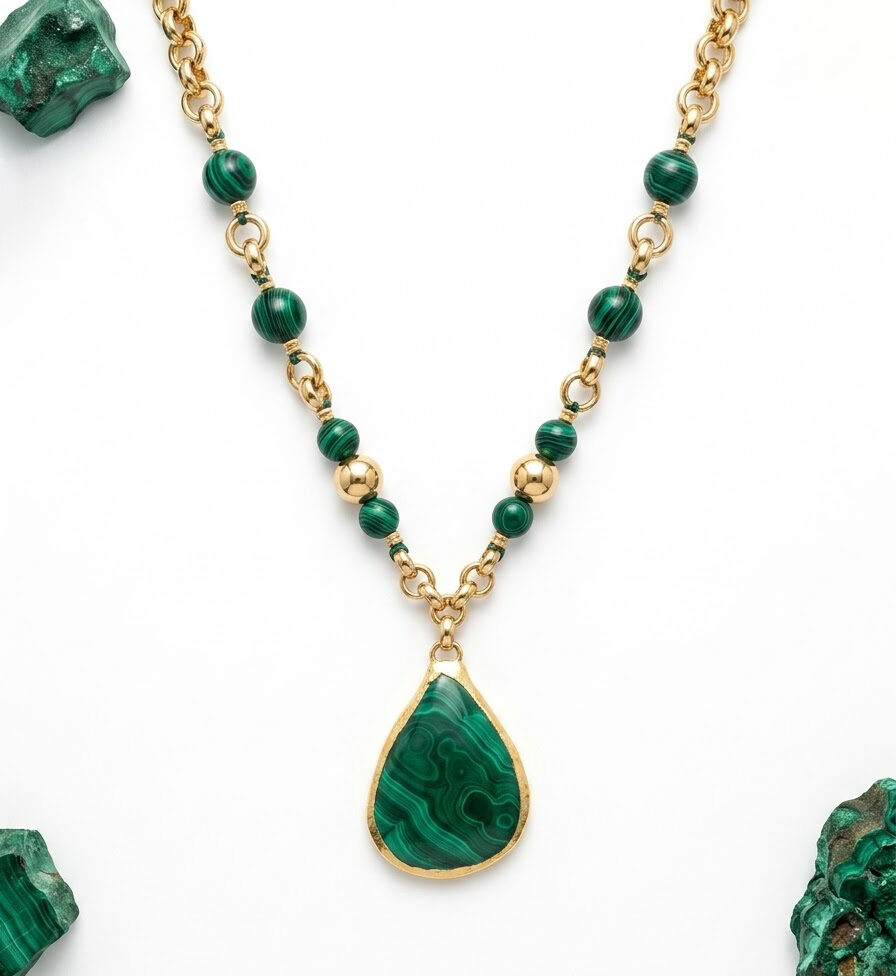
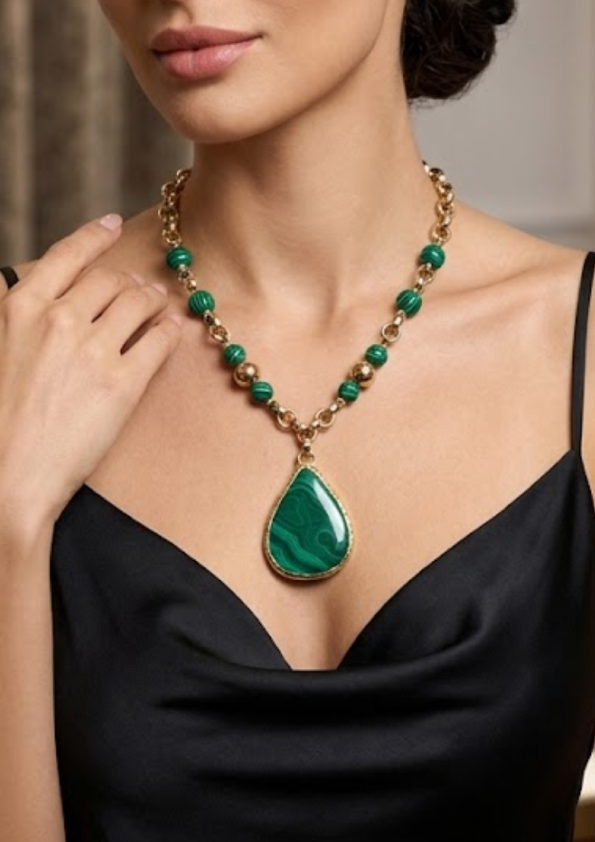
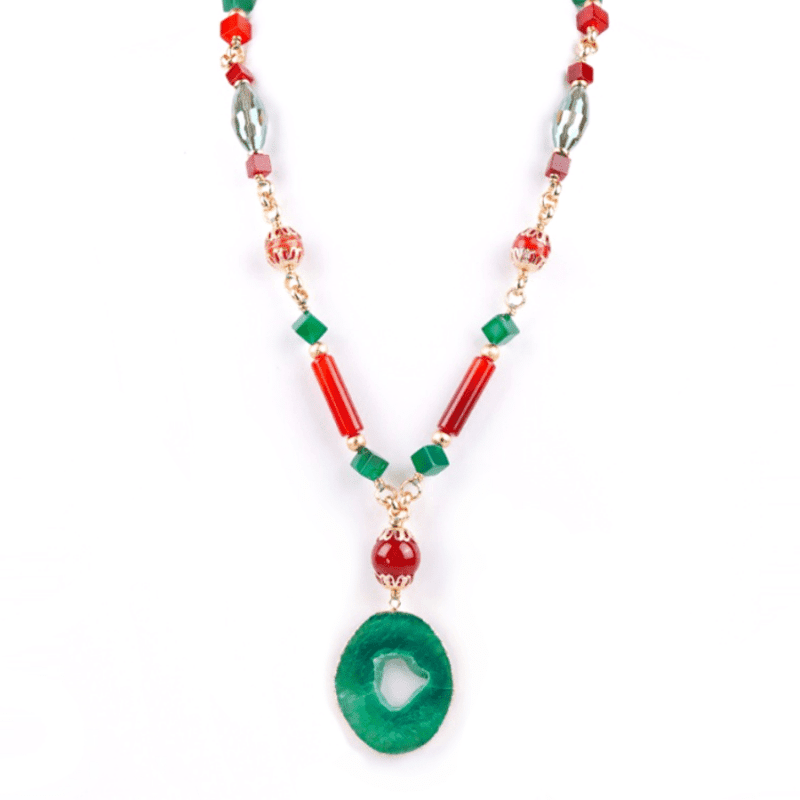
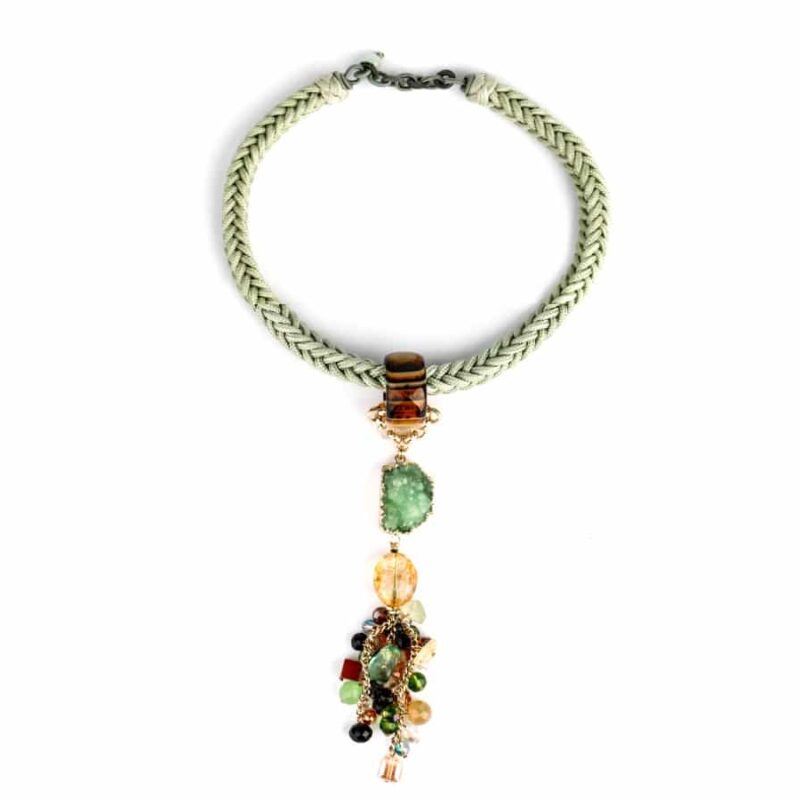
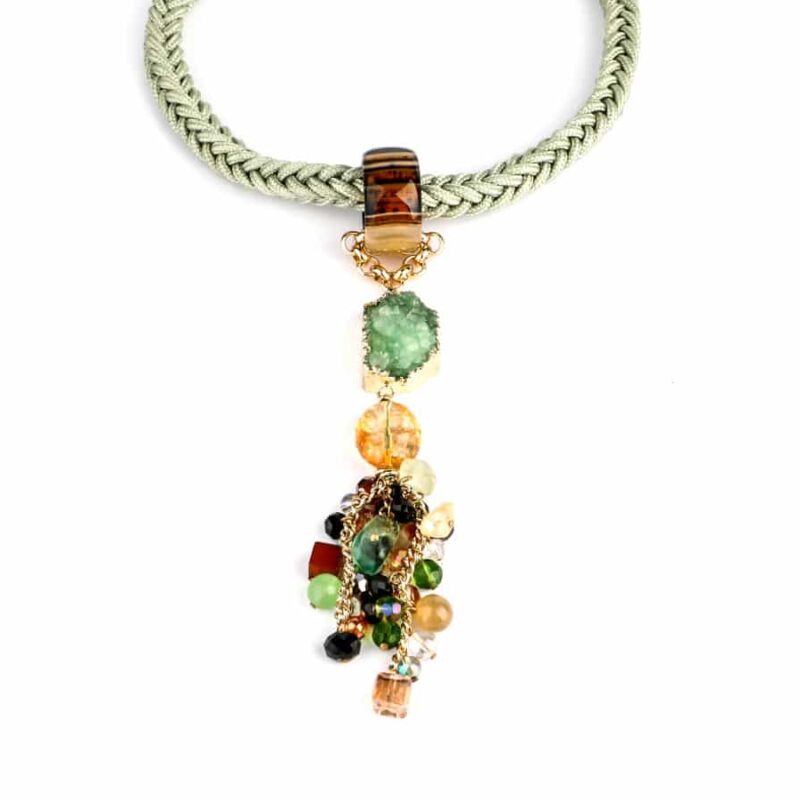
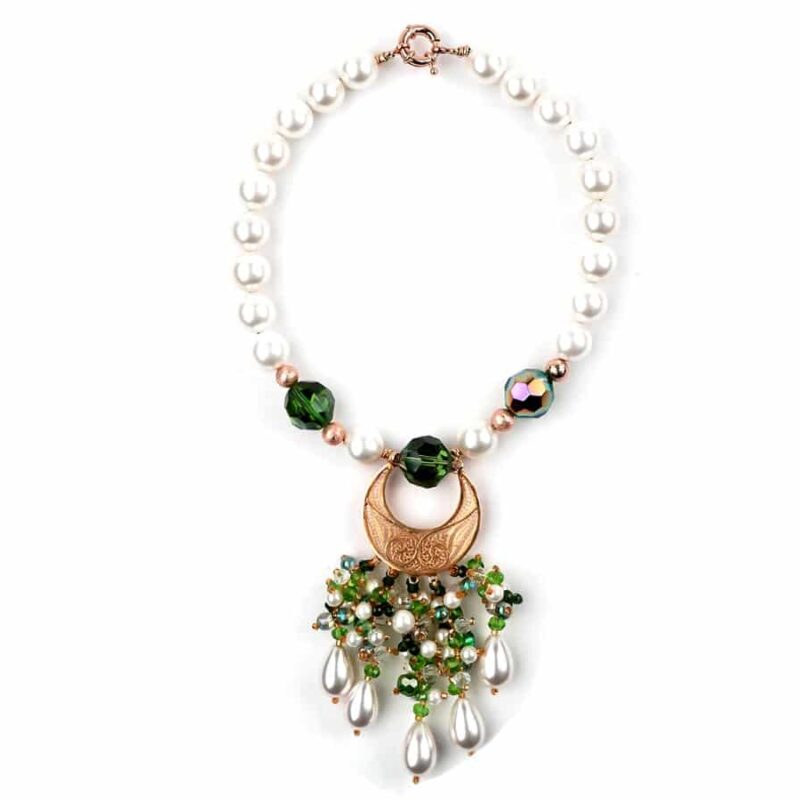
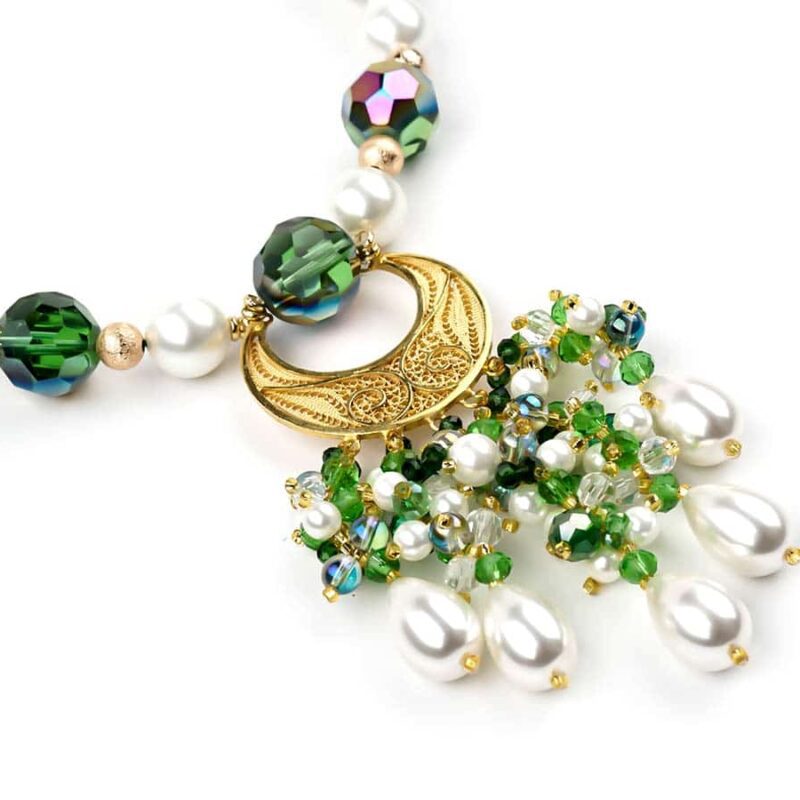
Green malachite necklace
Benefits and Properties of Malachite
- Helps relieve muscle pain
- Enhances self-confidence
- Helps soothe menstrual discomfort
- Protects against nightmares and sleep disturbances
- Supports the immune system
- Helps reduce negative emotions such as anxiety and stress
- Supports liver detoxification
Where Does the Name “Malachite” Come From?
The name malachite is believed to have Latin and Greek origins. It is associated with the Ancient Greek words molochē and malachē, referring to the mallow plant. The leaves of this plant feature numerous veins and have a deep, vibrant green color, strongly reminiscent of the beautiful patterns found in malachite.
Another legend suggests that the name may derive from the Greek word malakos, meaning “soft.” This would refer to malachite’s relatively delicate nature and its sensitivity to heat.
History & Origin of Malachite
Admired by the ancient Egyptians, malachite symbolized eternal youth and rebirth. The Egyptians even referred to the afterlife as the “Realm of Malachite.” According to their beliefs, death represented the beginning of a new life, and malachite became a powerful symbol of this transition.
Egyptian women also wore malachite around their necks as a protective talisman during pregnancy. The stone was associated with Taweret, the hippopotamus goddess who protected mothers and childbirth.
In Ancient Greece, warriors wore malachite as an amulet around their necks or as bracelets, believing it offered protection from injuries. The green stone was also associated with healing and was valued for its decorative beauty. Malachite was even used as an ornamental stone in the Temple of Artemis at Ephesus.
During the Middle Ages, beliefs surrounding the properties of malachite evolved. Some believed that the stone could help humans understand animals, while others used it as a protective shield against the evil eye. It was also believed to protect children from illnesses that were widespread at the time.
Since the modern era, malachite has been widely used to decorate various artistic and ornamental objects. Its intense green pigments can still be found today in illuminated manuscripts and wall frescoes.
Malachite deposits can be found in many parts of the world, including Australia, the United States, Italy, and France. Malachite is a secondary mineral that forms in copper deposits. Its distinctive concentric patterns, bands, and shimmering textures make it a fascinating and highly sought-after ornamental stone.
Properties of Malachite
Physical Properties
In crystal and traditional lithotherapy practices, malachite is often described as an energy-absorbing stone and is traditionally associated with physical well-being.
It is traditionally used to help soothe muscle discomfort and is sometimes placed directly on areas of tension during relaxation practices. Malachite is also traditionally associated with respiratory comfort.
Because of its copper content, malachite has traditionally been associated with menstrual comfort and circulation. In lithotherapy, it is also commonly associated with purification and detoxification.
Malachite is traditionally considered an invigorating stone, associated with vitality, endurance, and overall energy.
Emotional & Spiritual Properties
From an emotional and spiritual perspective, malachite is highly valued in lithotherapy. Traditionally, placing malachite over the upper abdomen is believed to encourage the flow of energy and promote emotional expression.
Wearing a malachite bracelet is traditionally associated with greater self-confidence and improved communication with others.
The vibrant green color of malachite is often associated with hope, balance, and serenity. In lithotherapy, its energy is believed to help dispel negative thoughts and support emotional calm, particularly during periods of stress or anxiety.
Malachite is also frequently regarded as a protective stone. Traditionally, it is believed to help ward off nightmares and encourage peaceful, restful sleep by calming an overactive mind.
What Is the Power of Malachite?
Malachite is traditionally associated with the Heart Chakra, the fourth chakra. Located in the center of the chest, the Heart Chakra is associated with emotions, relationships, compassion, and our connection with others.
According to lithotherapy traditions, malachite helps restore balance to this chakra and encourages its energy to flow more freely. When the Heart Chakra is believed to be unbalanced, feelings of emotional rejection or difficulty connecting with oneself and others may arise.
Malachite is also associated with the Sacral Chakra, the second chakra, located below the navel. This chakra is traditionally linked to emotions, creativity, relationships, and self-expression.
Wearing malachite is believed in lithotherapy to help balance the Sacral Chakra, encourage self-confidence, and support emotional expression.
Which Stones Can Be Paired with Malachite?
In lithotherapy, stones with similar colors are often believed to share complementary energetic properties. However, malachite is traditionally considered a particularly powerful stone.
According to some lithotherapy traditions, malachite is best worn on its own because of its strong energy. It is therefore often recommended to wear malachite separately rather than combining it with other stones such as Lapis Lazuli or Amethyst.
A Timeless Stone of Elegance & Character
With its deep green color and naturally distinctive patterns, malachite is much more than a gemstone. It is a stone rich in history, symbolism, and cultural heritage.
Our Malachite Necklace celebrates the natural beauty of this exceptional stone, combining timeless elegance with the powerful symbolism traditionally associated with malachite.
 No products in the cart.
What others are saying
There are no contributions yet.