



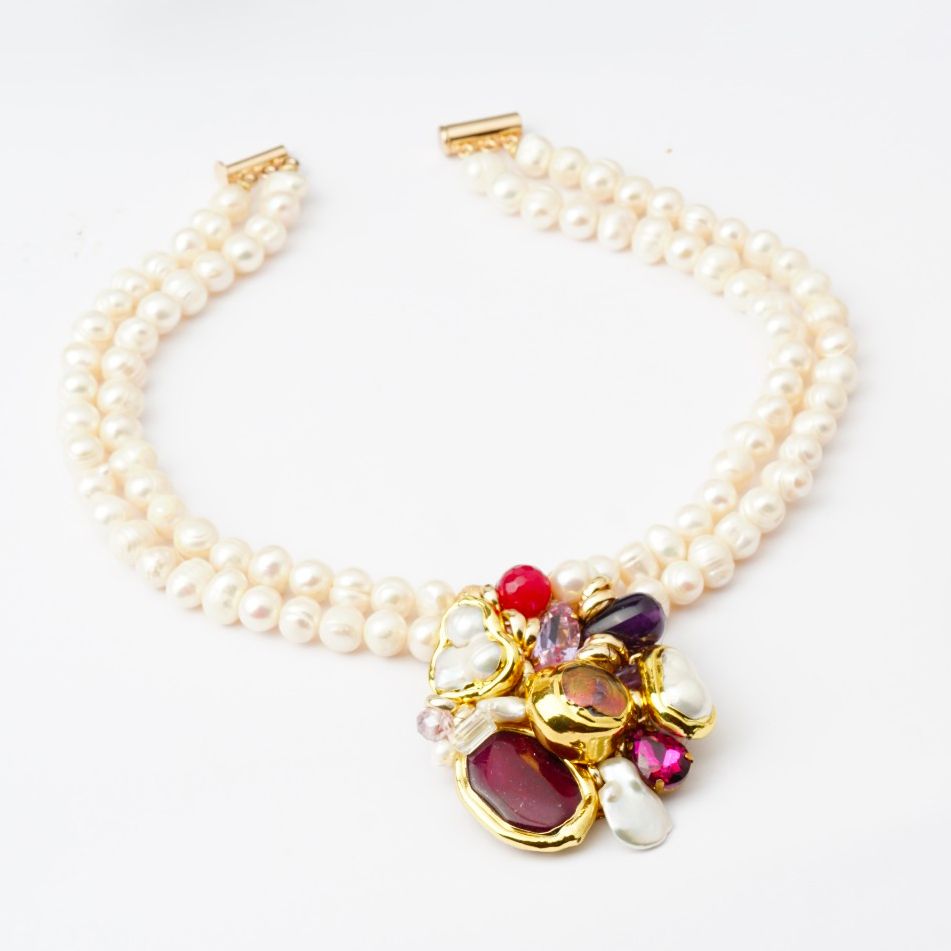
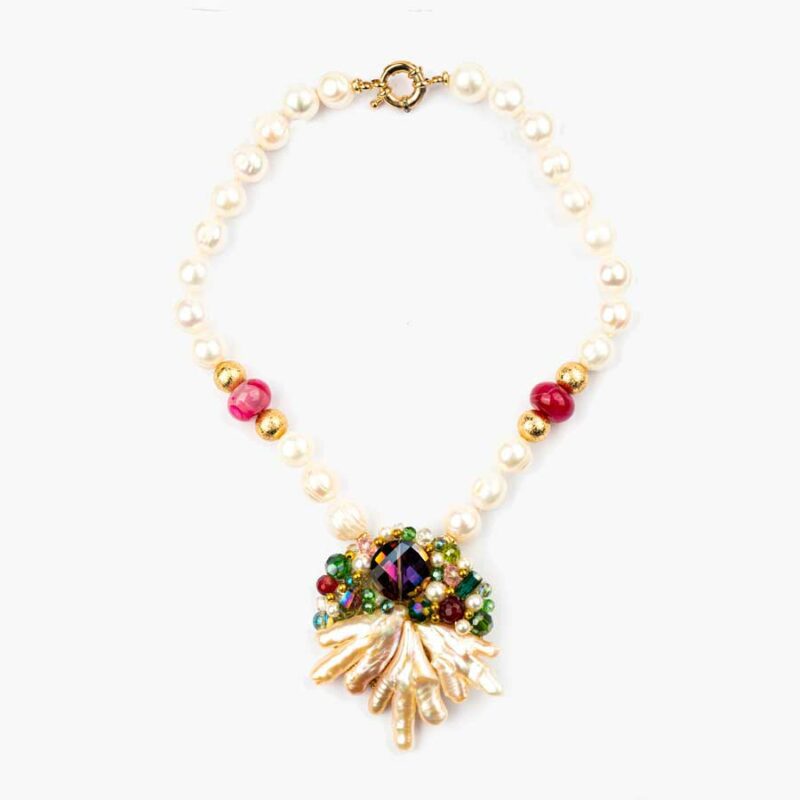
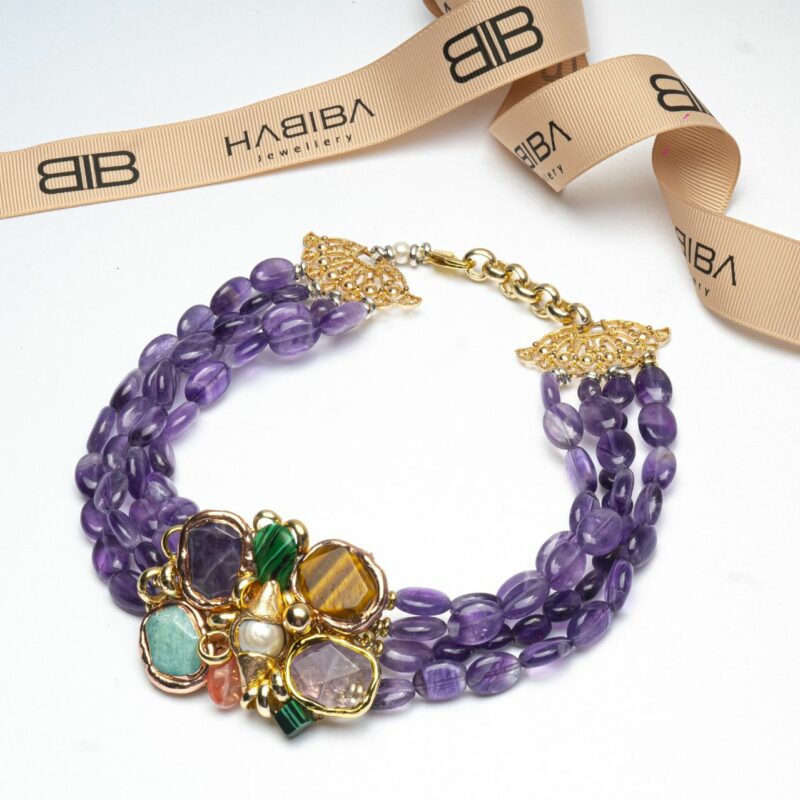
FRIDA Necklace, Amethyst and Pearls
AMETHYST: ITS HISTORY, ORIGIN, COMPOSITION, PROPERTIES AND BENEFITS IN LITHOTHERAPY
Among all gemstones, Amethyst is considered the queen of the world of lithotherapy, just as the diamond is in the world of jewelry, thanks to its natural beauty and remarkable qualities.
With its elegant and hypnotic shades of violet, amethyst has fascinated civilizations throughout history. This precious gemstone is traditionally associated with wisdom, inner peace, and spiritual balance. It is often appreciated for its ability to inspire serenity, creativity, and emotional harmony.
Discover the fascinating history of this exceptional gemstone, its origins, unique composition, and the symbolic benefits traditionally attributed to it, whether worn as jewelry, displayed in a living space, or treasured as a natural crystal.
WHAT IS THE ORIGIN OF THE WORD “AMETHYST”?
The name “amethyst” originates from Greek mythology. From an etymological perspective, it comes from the Greek word “methystos”, meaning “intoxication,” combined with the prefix “a-”, indicating absence or deprivation. Therefore, the literal meaning of amethyst is “not intoxicated” or “sober.”
According to Greek mythology, Amethystos was the name of a beautiful nymph, a divine female creature inspired by nature. The god Dionysus, fascinated by her beauty, attempted to seduce her several times, but she resisted his advances. To protect Amethystos, the goddess Artemis transformed her into a cold and impenetrable crystal.
Overwhelmed by anger and emotion, Dionysus poured his wine over the crystal, giving it its deep violet color, mysterious and captivating. Inspired by this legend, ancient Greeks began drinking wine from amethyst cups, believing that the stone would protect them from intoxication.
THE HISTORY OF AMETHYST
Originally used as an ornamental stone, amethyst was treasured by ancient civilizations such as the Etruscans and Egyptians for decorative purposes. During the 18th century, it was also used to create precious accessories such as brooches and clasps.
Throughout history, amethyst has been considered a gemstone of great value and has adorned prestigious treasures, including royal crowns such as the British, Egyptian, and Russian crowns.
Because of its enchanting color and exceptional brilliance, amethyst remains one of the most admired gemstones in jewelry today.
With its violet hues, amethyst was known as the stone of Bacchus, the Roman god of wine. Following the Greek tradition, Romans used amethyst cups decorated with representations of Bacchus, believing they would protect themselves from excessive drinking. They also created bracelets and necklaces featuring this mystical gemstone, honoring both Bacchus and the legendary nymph Amethystos.
AMETHYST IN RELIGIOUS AND SPIRITUAL TRADITIONS
In biblical traditions, amethyst holds a significant symbolic place. Quartz gemstones have long represented purity, devotion, and spirituality. During the Middle Ages, amethyst frequently appeared in religious ornaments, including sacred relics, bishops’ rings, and ceremonial garments.
Many Christian traditions highlight the importance of this gemstone. It was associated with spiritual commitment, wisdom, and devotion. Amethyst also holds an important place in Buddhist traditions, where it is often used in prayer beads and spiritual jewelry.
During the Renaissance period, Leonardo da Vinci praised the qualities of amethyst. According to his writings, he valued the violet gemstone for its association with enhanced creativity, concentration, intelligence, and the ability to clear negative thoughts.




 No products in the cart.